
In modern search engine optimization, backlinks remain an important part of how search engines discover relationships between websites and evaluate online authority. However, the landscape surrounding off-page SEO has evolved significantly. Search engines increasingly focus on relevance, content quality, editorial context, and overall site quality rather than simply counting backlinks.
For businesses looking to increase organic visibility, acquiring relevant editorial mentions through carefully planned link building packages can support a broader SEO strategy. The key is choosing a provider that prioritizes quality, transparency, topical relevance, and sustainable practices rather than promising rankings through high-volume link acquisition.
Finding affordable link building packages in 2026 does not mean choosing the cheapest service available. It means identifying a solution that provides a reasonable balance between cost, editorial quality, publisher relevance, transparency, and long-term SEO value.
This comprehensive guide explains how link building packages work, what different services include, how pricing can vary, what quality signals to evaluate, and how to choose an off-page SEO provider without relying on misleading promises.
What Are Link Building Packages?
A link building package is a managed SEO service designed to help businesses acquire relevant backlinks and online mentions through activities such as publisher outreach, content creation, digital PR, or contextual placements.
Instead of building an internal outreach team, purchasing multiple SEO databases, researching publishers, and communicating with website owners individually, businesses can use a managed service to handle some or all of the process.
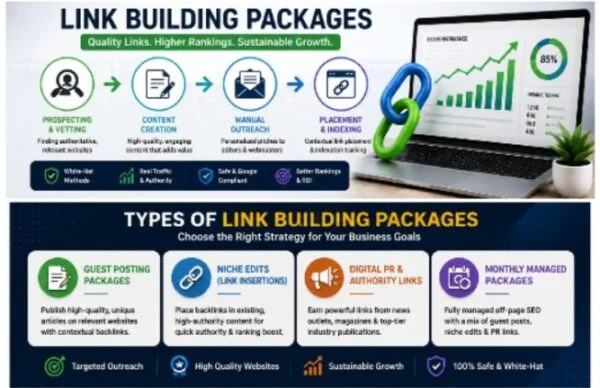
Modern link building campaigns may combine several resource-intensive activities:
- Prospecting & Qualification: Identifying authoritative, relevant websites and evaluating their content quality, organic visibility, audience relevance, and backlink profiles.
- Content Creation: Producing useful, original content that fits the subject and editorial standards of the publishing website.
- Manual Relationship Building: Communicating with publishers, editors, journalists, and website owners to identify legitimate placement opportunities.
- Quality Control: Reviewing publisher relevance, link placement, content quality, anchor text, and the overall context of each placement.
- Performance Reporting: Providing live URLs and campaign information so businesses can monitor what was actually delivered.
Modern Link Building Workflow
Prospecting → Content Creation → Publisher Outreach → Editorial Placement → Quality Review → Reporting
A strong campaign focuses on the quality and relevance of each opportunity rather than simply maximizing the number of links acquired.
Why Link Quality and Topical Relevance Matter
Search engines have moved well beyond evaluating backlinks based only on quantity. A relevant editorial mention from a website that publishes useful content within the same or a closely related subject area can be more meaningful than a large number of unrelated placements.
Google’s Affordable Link Building Packages in 2026 link spam policies explain that links created primarily to manipulate search rankings can violate Google’s spam policies. This makes editorial relevance, genuine usefulness, and transparency important considerations when evaluating an off-page SEO service.
High-Impact Backlink Criteria
| Criterion | What to Look For |
| Topical Relevance | The publisher regularly covers subjects related to your industry |
| Organic Visibility | The website has evidence of genuine search visibility |
| Editorial Quality | Content follows reasonable publishing standards |
| Natural Context | The link makes sense within the surrounding content |
| Publisher Reputation | The website has a credible history and useful audience |
| Transparency | The provider clearly explains what is being delivered |
When evaluating link building packages, look beyond surface-level metrics such as Domain Rating (DR) or Domain Authority (DA). A high metric alone does not guarantee that a website is a valuable publishing opportunity.
Consider the complete picture: topical relevance, content quality, organic visibility, audience fit, outbound linking patterns, and the reputation of the publisher.
Types of Link Building Packages Available
Different businesses require different approaches to off-page SEO. A new website may need a gradual foundation of relevant mentions, while an established brand may benefit from a combination of editorial outreach, digital PR, and strategic content promotion.
Keep the existing “Types of Link Building Packages Available” image here.
1. Custom Guest Posting Packages
Guest posting involves creating useful, original content for a relevant third-party publication. When the publisher accepts the content and includes a relevant editorial link, the placement can help users discover additional resources while also strengthening relationships between related websites.
When reviewing guest post pricing options, consider more than the number of placements included. Look for information about publisher quality, topical relevance, editorial standards, content creation, and reporting.
A strong guest publishing strategy should focus on contributing genuinely useful information rather than producing articles solely to obtain backlinks.
2. Niche Edits and Contextual Link Placement
Contextual link placement involves adding a relevant reference to an existing piece of content where the reference genuinely improves the reader’s experience.
The value of such a placement depends on the quality and relevance of the host page, the surrounding content, the publisher, and whether the link is editorially appropriate. An existing indexed page should not automatically be treated as a guaranteed shortcut to rankings or link value.
For this reason, businesses should evaluate contextual link placement based on relevance and editorial fit rather than simply whether the host page is already indexed.
3. Digital PR & Authority Media Campaigns
Digital PR focuses on earning attention and mentions from established publications, industry websites, journalists, and other influential sources.
Campaigns can be built around original research, proprietary data, expert commentary, useful studies, newsworthy announcements, or other assets that publishers have a genuine reason to reference.
Digital PR can require a larger investment than standard outreach, but its main advantage is the potential to earn broader brand exposure and authoritative editorial mentions.
4. Fully Managed Monthly Retainers
Managed monthly packages allow businesses to outsource a larger portion of their off-page SEO workflow.
Depending on the provider, a campaign may include publisher research, content creation, outreach, guest publishing, contextual placements, digital PR, reporting, and ongoing quality checks.
The exact combination should depend on the website’s goals, industry, existing authority, content quality, and competitive landscape rather than following a fixed monthly link quota.
Link Building Package Pricing Breakdown in 2026
The cost of link building varies considerably depending on publisher quality, editorial requirements, content production, outreach difficulty, industry, geographic market, and the type of placement being pursued.
The following ranges can be used as general market planning benchmarks rather than guaranteed industry prices:
| Package Tier | Example Publisher Profile | Approximate Cost Range | Potential Use Case |
| Starter / Tier 1 | Relevant sites with established organic visibility | $150–$300 | Smaller businesses and early-stage websites |
| Growth / Tier 2 | Stronger publishers with greater traffic and authority | $300–$600 | Growing brands, eCommerce, and SaaS |
| Enterprise / Tier 3 | High-authority industry or national publications | $600–$1,500+ | Competitive markets and established brands |
| Digital PR Campaign | Major publications and targeted media outreach | $3,000–$10,000+ | Data campaigns, research, and large PR initiatives |
These figures can vary significantly between providers and industries. A higher price does not automatically mean a better link, just as a low price does not automatically mean poor quality.
The most useful comparison is what is actually included in the service and whether the publishing opportunities are relevant to the business.
The True Cost of Cheap Link Packages
Extremely inexpensive packages promising dozens or hundreds of backlinks should be evaluated carefully.
Offers such as “$50 for 100 links” may involve low-quality directories, automated placements, irrelevant websites, or other practices that provide little meaningful value. Some may also create patterns that conflict with search-engine spam policies.
An affordable link building package should therefore be judged by value rather than volume.
A lower-cost service can still be useful when it provides carefully selected publishers, relevant content, transparent reporting, and legitimate outreach. The goal is to acquire meaningful placements—not simply increase a backlink counter.
How to Vet a Link Building Service: Step-by-Step
Choosing an off-page SEO provider requires more than comparing package prices. Before committing a budget, evaluate the provider using the following framework.
Key Green Flags
- Full Metrics Transparency: The provider explains how publishers are evaluated and provides appropriate information about placements.
- Natural Anchor Text: The campaign uses varied, contextually appropriate anchor text instead of repeatedly targeting the same commercial phrase.
- Editorial Content: Content is original, useful, readable, and written for the intended audience.
- Relevant Publishers: Websites are selected based on subject relevance and audience fit rather than metrics alone.
- Clear Reporting: Deliverables include live URLs and useful campaign information.
- Realistic Expectations: The provider avoids guarantees about specific Google rankings.
Red Flags to Avoid
Be cautious with providers that promise guaranteed #1 rankings, sell enormous quantities of backlinks at extremely low prices, hide all publishing information, use undisclosed networks, or promise instant ranking improvements.
A responsible provider should explain the strategy clearly and acknowledge that organic search performance depends on many factors beyond backlinks.
Technical Elements of Modern Backlink Auditing
Building or earning new links is only one part of maintaining a healthy SEO strategy. Reviewing the quality and relevance of a website’s backlink profile can help identify unusual patterns and opportunities for improvement.
Industry resources such as Moz’s guide to growing website popularity and links and Ahrefs’ link-building resources can help marketers understand backlink analysis, referring domains, link opportunities, and broader SEO concepts.
Backlink Quality Checklist
- [ ] Host domain has relevant and useful content
- [ ] Website shows genuine organic visibility
- [ ] Publisher is relevant to the target audience
- [ ] Link appears naturally within the surrounding content
- [ ] Anchor text fits the context
- [ ] Content provides genuine value to readers
- [ ] Placement is transparent and editorially appropriate
A backlink audit should evaluate the overall context rather than relying on a single metric.
Measuring ROI on Link Building Campaigns
Link building should be treated as a long-term component of an organic growth strategy rather than a guaranteed short-term ranking tactic.
Useful performance indicators include:
- Referring Domains: Monitor the number and quality of relevant websites mentioning your domain.
- Target Keyword Visibility: Track changes in rankings and search visibility for important topics.
- Organic Search Traffic: Use Search Console and analytics data to evaluate broader organic performance.
- Referral Traffic: Determine whether placements generate relevant visitors.
- Conversions and Leads: Measure whether increased visibility contributes to business outcomes.
- Brand Mentions: Track whether outreach is increasing awareness within your target industry.
A campaign should be evaluated against its business objectives rather than backlink volume alone.
Integrating Off-Page Outreach with On-Page SEO
Backlinks cannot compensate for content that does not satisfy the searcher’s needs.
A successful SEO strategy combines external authority with strong content, useful internal linking, clear site architecture, and sound technical foundations.
High-Quality Content + Technical Optimization + Relevant Internal Linking + External Authority
These elements work together to strengthen the overall website.
Before investing heavily in off-page SEO, make sure important landing pages:
- Match Search Intent: Give visitors a clear and comprehensive answer to the topic they searched for.
- Provide Useful Internal Connections: Link relevant pages together using descriptive and natural anchor text.
- Maintain Technical Health: Keep important pages crawlable, minimize unnecessary redirect chains, and maintain good page performance.
- Build Topic Depth: Create related supporting content instead of relying on one page to cover an entire subject.
- Offer Strong User Experience: Make information easy to navigate, understand, and act on.
For example, a website covering guest posting can naturally connect its beginner resources, publishing options, link placement topics, SEO research resources, and pricing information.
Readers who want a broader introduction can explore a beginner-friendly guide to guest posting, while readers specifically researching publishing services can review quality guest publishing.
These relationships should be created because the pages genuinely support one another—not simply to increase the number of internal links.
Building Topical Authority Through a Connected Content Structure
Topical authority does not come from internal links alone. It develops from the combination of comprehensive content, relevant supporting pages, logical site architecture, useful internal connections, and a reputation built through genuinely valuable resources.
A website focused on link building, for example, can develop deeper topical coverage by publishing content around:
- Guest posting
- Guest post pricing
- Link building packages
- Contextual link placement
- Publisher relationships
- SEO research
- Link-building strategies
- Backlink evaluation
- Digital PR
- Content promotion
Internal links should connect these subjects where the relationship is useful to readers.
For example, when discussing how content relationships support a broader publishing strategy, readers can explore publisher relationships and content publishing.
When discussing how to evaluate existing pages for contextual opportunities, contextual link placement is a relevant supporting resource.
Similarly, marketers researching how search results can inform SEO decisions can explore the SEO research process.
The goal is not to place as many links as possible. The goal is to help visitors move naturally between closely related resources.
Anchor text should also vary naturally according to context. Instead of repeatedly using one exact keyword, publishers can use descriptive variations such as editorial guest publishing, contextual link placement, SEO research process, publisher relationships, or other phrases that accurately describe the destination page.
This approach creates a more natural information architecture while avoiding unnecessary repetition.
Conclusion
Choosing an affordable link building package in 2026 is not simply about finding the lowest price or purchasing the highest number of backlinks.
A sustainable approach focuses on publisher relevance, editorial quality, transparent outreach, useful content, natural contextual references, and realistic expectations.
The strongest campaigns also work together with on-page SEO. High-quality content, a logical internal linking structure, strong topical coverage, technical health, and relevant external mentions can collectively improve the foundation on which organic growth is built.
Businesses should therefore evaluate link building providers based on quality, relevance, transparency, and strategic fit—not backlink volume alone.
When these principles are combined with useful content and a well-organized website structure, link building can become a meaningful part of a broader organic search strategy.
Frequently Asked Questions
1. How long does it take to see results from link building packages?
There is no guaranteed timeframe for ranking improvements. Search visibility can change at different speeds depending on the website’s existing authority, competition, content quality, crawling and indexing, and many other factors.
Some changes may become visible within weeks, while more competitive campaigns can take considerably longer.
2. How many backlinks should a site acquire each month?
There is no universal monthly backlink number that guarantees better rankings.
Instead of targeting a fixed quantity, focus on earning or acquiring relevant, legitimate placements that fit your content strategy and overall SEO goals.
3. Are low-cost link building packages safe for new sites?
Price alone does not determine whether a package is safe or effective.
However, extremely cheap services promising large quantities of backlinks deserve careful scrutiny. Before purchasing, investigate how publishers are selected, how content is produced, where links are placed, and whether the provider follows search-engine spam policies.
4. What is the difference between guest posts and niche edits?
A guest post involves creating a new article for a third-party publication, usually with a relevant reference or link included within the content.
A niche edit or contextual link placement involves adding a relevant reference to an existing article or page where it genuinely fits the subject.
The quality of either approach depends on the relevance, editorial context, publisher quality, and usefulness of the placement.
5. What anchor text strategy should be used for link building?
Use anchor text that accurately describes the destination and fits naturally within the surrounding sentence.
A healthy strategy can include branded terms, descriptive topic phrases, URLs, and natural contextual wording. Avoid forcing the same exact-match commercial keyword into every placement.
Anchor diversity should support readability and relevance rather than being treated as a fixed percentage formula.