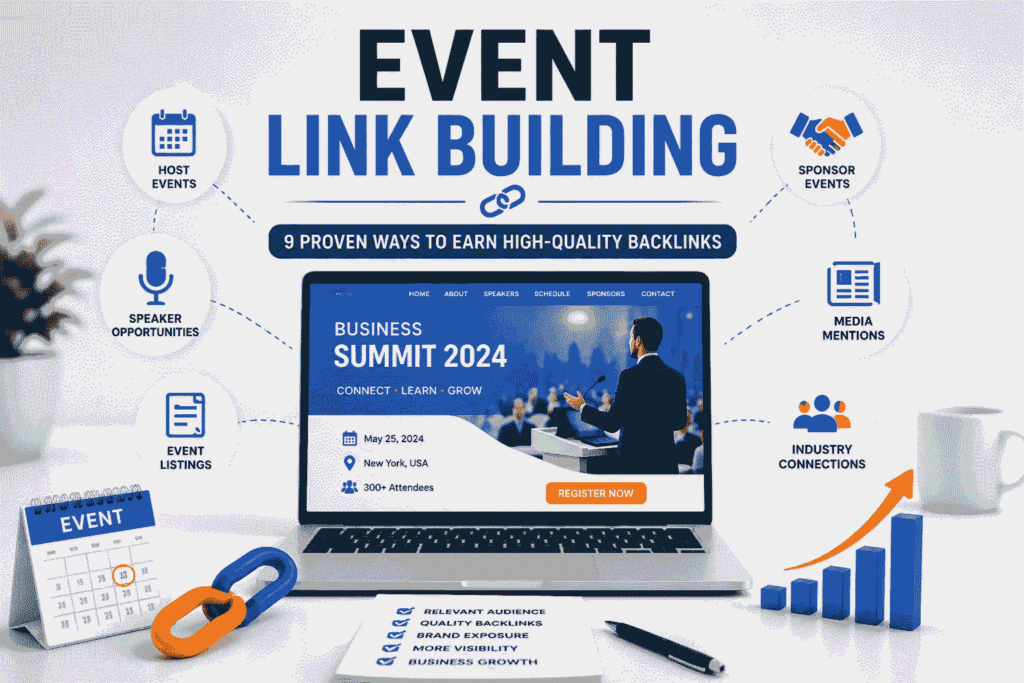
Building quality backlinks does not always mean relying on traditional outreach campaigns. Businesses can also earn relevant links by hosting events, sponsoring conferences, speaking at industry gatherings, and creating resources that event organizers and publications want to reference.
Event link building is an SEO strategy that uses events and event-related activities to create legitimate opportunities for backlinks. These links can come from event websites, sponsor pages, speaker profiles, local publications, industry blogs, and event recaps.
In this guide, you’ll learn nine practical ways to use events for link acquisition and how to evaluate whether an event is actually worth pursuing.
What Is Event Link Building?
Event link building involves earning backlinks through legitimate participation in events or by creating and promoting your own events.
These events can include:
- Industry conferences
- Local meetups
- Webinars
- Workshops
- Seminars
- Trade shows
- Networking events
- Charity activities
- Virtual conferences
- Community events
For example, an SEO agency could organize an online SEO workshop and create a dedicated event page. The agency could then promote the workshop through relevant communities, industry websites, local organizations, and event platforms.
If other websites find the event useful or newsworthy, they may mention it and link to the original event page.
The strategy works particularly well when the event itself provides genuine value rather than being created simply to obtain backlinks.
Why Event Link Building Matters for SEO
A healthy backlink profile generally benefits from a variety of legitimate link acquisition methods.
Event campaigns can create opportunities for links from organizations, publishers, speakers, sponsors, and communities that are relevant to a business.
They can also provide benefits beyond SEO, including:
- Brand exposure
- Referral traffic
- Industry relationships
- Local visibility
- Media coverage
- New business opportunities
- Professional networking
However, the goal should not be to collect the highest possible number of links. Relevance and quality should come before quantity.
Businesses can also combine event campaigns with building links through contributed content to diversify their overall approach to earning references from other websites.
9 Proven Event Link Building Strategies

1. Host Your Own Event
Hosting your own event gives you control over the event page, speakers, resources, and promotional campaign.
Create a dedicated page on your website that clearly explains:
- Event title
- Date and time
- Location
- Event description
- Speakers
- Registration details
- Organizer information
- Contact details
- Relevant images
Once the page is live, promote it through relevant event platforms, industry communities, professional organizations, and local publications.
A useful event can naturally attract mentions from people who want to share it with their audiences.
2. Sponsor Relevant Events
Sponsoring an established event can be an effective way to connect your business with a relevant audience.
Potential opportunities include:
- Industry conferences
- Local business meetups
- Charity events
- Professional workshops
- University events
- Trade shows
- Community activities
Some legitimate events publish sponsor information on their websites and may include participating organizations with website links.
Before paying for sponsorship, evaluate the event carefully. Consider its audience, reputation, website quality, industry relevance, and overall visibility.
Do not sponsor an event simply because it offers a backlink. The partnership should make sense for your business even without the SEO benefit.
3. Become a Speaker or Presenter
Speaking at a relevant event can create valuable opportunities for visibility and link acquisition.
Conference and webinar organizers often publish speaker profiles containing information such as:
- Name
- Professional biography
- Company
- Website
- Social profiles
- Presentation details
Instead of approaching organizers only for a link, focus on becoming a useful contributor.
You could offer:
- A keynote presentation
- An educational workshop
- A panel discussion
- A webinar
- A technical demonstration
- An industry presentation
A strong presentation can also lead to additional mentions when attendees and publications discuss the event.
4. Find Relevant Event Listing Opportunities
Event platforms and community websites can help legitimate events reach people who are actively looking for conferences, workshops, and other activities.
Look for platforms that are relevant to:
- Your industry
- Your location
- Your target audience
- Your professional community
Avoid submitting an event to hundreds of unrelated websites simply to obtain backlinks.
A smaller number of relevant placements can be more useful than a large number of low-quality listings.
5. Use Event Structured Data
If you organize an event, implementing Event structured data can help search engines understand important information about the event.
Google’s official Event structured data documentation explains how eligible event pages can use structured data to help Google understand event details such as the event name, location, dates, and organizer.
A properly optimized event page can include information such as:
- Event name
- Start and end dates
- Location
- Organizer
- Description
- Ticket information
- Event URL
Structured data does not automatically generate backlinks or guarantee higher rankings. Its purpose is to provide search engines with clearer information about eligible events.
6. Earn Links From Local Media
Local events can create excellent digital PR opportunities.
If your event has genuine news value, reach out to relevant:
- Local newspapers
- Business publications
- Community websites
- Industry magazines
- Local bloggers
- Journalists
For example, a company organizing a free educational workshop for local businesses may have a legitimate story that a local publication would want to cover.
When conducting outreach, pitch the value of the event or story rather than simply asking for a backlink.
7. Create Valuable Event Recaps
Your link-building campaign should not end when the event finishes.
Create a useful recap covering:
- Key discussions
- Speaker insights
- Important statistics
- Photos
- Videos
- Presentation slides
- Attendee questions
- Main takeaways
You can then share the recap with speakers, sponsors, attendees, and relevant publications.
If the content provides useful information, people may reference it in their own articles and resources.
You can also turn event discussions into original research, statistics, guides, or downloadable resources that become valuable linkable assets.
8. Build Relationships With Organizers
Successful event link building is often based on relationships rather than one-time requests.
Instead of contacting event organizers only when you want a backlink, look for ways to contribute value.
For example, you could:
- Share their event
- Recommend speakers
- Provide useful resources
- Participate in a panel
- Offer expert commentary
- Collaborate on a webinar
- Sponsor a relevant event
Building genuine relationships can lead to future speaking opportunities, partnerships, interviews, and editorial mentions.
9. Combine Event Link Building With Other Strategies
Event link building does not need to operate as a standalone SEO tactic.
A business can combine event campaigns with:
- Digital PR
- Content marketing
- Industry partnerships
- Local SEO
- Expert interviews
- Contributed content
- Resource link building
For businesses that want to explore a broader link acquisition strategy, combining several relevant methods can help create a more diversified backlink profile.
The important point is to prioritize legitimate, relevant opportunities rather than attempting to manipulate search rankings through large volumes of low-quality links.
How to Evaluate an Event Link Building Opportunity
Not every event is worth your time or marketing budget.
Before participating, evaluate the following factors.
Website Quality
Look at the event’s website. Does it appear legitimate, active, and useful to its audience?
Topical Relevance
An event related to your industry is generally more meaningful than an unrelated event created solely for obtaining a link.
Audience
Consider who actually attends the event.
An event with 200 highly relevant professionals may be more valuable to your business than an event with thousands of unrelated visitors.
Reputation
Look for signs that the organizers have previously hosted legitimate events and worked with credible businesses or organizations.
Link Opportunity
Determine where your business could realistically be mentioned.
Potential placements can include:
- Sponsor pages
- Speaker profiles
- Event pages
- Partner pages
- Media coverage
- Event recaps
Overall Business Value
Finally, ask an important question:
Would this event still be worthwhile if it did not provide a backlink?
If the answer is yes, the opportunity is much more likely to be worth considering.
Event Link Building vs. Traditional Guest Posting
Event link building and guest posting are different approaches to acquiring online visibility and backlinks.
With guest posting, a business contributes useful content to another relevant website and may receive a contextual or author-related link when the publisher’s guidelines allow it.
Event link building uses activities such as conferences, sponsorships, speaking engagements, webinars, and event promotion to create link opportunities.
Both approaches can have a place in a broader SEO campaign.
For example, a company could publish educational content on relevant industry websites while also participating in conferences and webinars.
When researching relevant publishing opportunities, businesses should evaluate topical relevance, audience quality, editorial standards, and the overall value of the website rather than focusing only on backlink metrics.
Common Event Link Building Mistakes
Event link building can become ineffective when the primary objective is simply acquiring links.
Avoid these common mistakes:
Sponsoring Irrelevant Events
Do not spend money on unrelated events solely because a sponsor page contains a website link.
Using Low-Quality Event Directories
Submitting events to hundreds of weak directories can create little real value.
Creating Fake Events
Events should represent genuine activities. Creating fake events purely for SEO can damage trust and create poor-quality content.
Ignoring the Audience
A backlink is less meaningful if the event’s audience has nothing to do with your business.
Focusing Only on Metrics
Domain authority or similar third-party metrics should not be the only criteria used to evaluate an opportunity.
Treating Structured Data as a Link-Building Method
Event schema helps search engines understand event information. It does not create backlinks by itself.
A Simple Event Link Building Workflow
A practical campaign can follow these steps:
Step 1: Define your target audience.
Step 2: Find relevant industry, local, or online events.
Step 3: Evaluate each event’s audience, reputation, website, and potential opportunities.
Step 4: Decide whether to host, sponsor, speak, or collaborate.
Step 5: Create a useful event page or supporting resource.
Step 6: Promote the event through relevant organizations, publications, communities, and partners.
Step 7: Contact relevant journalists and publishers when there is genuine news value.
Step 8: Publish an event recap or useful resource after the event.
Step 9: Track mentions, referral traffic, and newly earned links.
Step 10: Maintain relationships with valuable event partners.
This workflow puts value and relevance ahead of simply collecting backlinks.
Final Thoughts
Event link building can be a valuable addition to an SEO campaign when it is based on genuine events, useful content, and meaningful relationships.
Businesses can host their own events, sponsor relevant conferences, participate as speakers, work with local media, submit legitimate events to relevant platforms, and create useful resources after an event.
The strongest approach is not to ask, “How can I get a backlink from this event?”
Instead, ask:
“How can I create something valuable enough that relevant organizations and publishers naturally want to mention it?”
That shift makes event link building more sustainable and gives the campaign benefits beyond rankings, including brand visibility, referral traffic, partnerships, and industry authority.